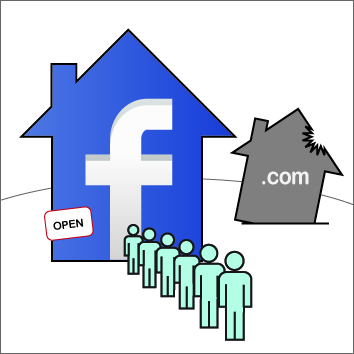
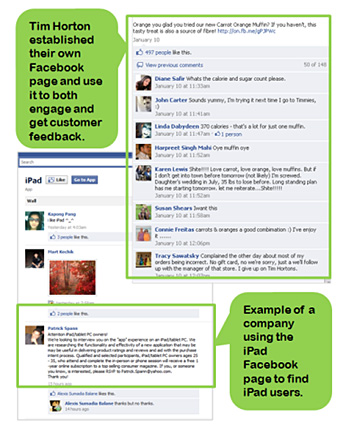
More and more this question is being discussed in corporate boardrooms across the world. Many advertising campaigns have already shifted from driving potential customers to their corporate home page and/or campaign microsite to their branded Facebook and YouTube sites. In some cases, organizations have elected to shut down their main corporate website altogether and set up shop within Facebook. For example the U.S. State Department, see the CBS News story, “Is it time to shut down your website?”
When you look at the numbers it’s hard to make a case against this strategy. Facebook alone has more than 800 million members worldwide, including 18 million Canadians, half of which login on a daily basis. They’re spending an average of 21 hours per month on Facebook and corporate branded pages get 70 million new Canadian fans each month. Numbers don’t lie and they’re huge!
But I’ve got to be honest, placing all your emphasis on social sites like Facebook and YouTube scares me a little. Don’t get me wrong, I think you should have a significant presence on these platforms. You should be participating and dedicating resources to maintaining them. But it’s important to recognize that you have very little control over the customer experience, privacy and not to mention a consumer’s primary purpose on these sites is to socialize.
What do Canadians have to say?
We asked more than 1,000 Canadians, via AskingCanadians™, the following questions: When you think of your favourite brands, where on the web do you tend to visit the most? Is it the corporate-branded website? Is it their corporate-branded social media sites? Or, is it a third party consumer-led social media sites?
Corporate-branded websites came out on top. A very close second was the consumer-led or consumer-generated sites (e.g. blogs). Dead last was the branded social media site. A couple of reasons why: the lack of trust and poor customer experience on today’s social sites.
Customer experience will improve over time as brands learn to work within these new emerging platforms and create seamless customer experiences. But building trust is a whole other ball game. People are still very cautious about the information they consume on social media sites, even branded ones. They trust the information on a corporate branded site. Why? Because of the detailed privacy, legal and security policies. Not to mention the brand is in control of the end-to-end customer experience. Yes, believe it or not customers do want the brand to maintain some control.
The Work Horse
At the end of the day your corporate website is still the work horse behind driving real business. It’s the backbone of your online ecosystem by providing a seamless end-to-end customer experience, capturing customer data in a secure manner and controlling the total brand experience. Facebook is part of the digital ecosystem, absolutely. It’s a big part of the total customer journey. Branded Facebook pages and YouTube channels are essentially taking the place of the traditional campaign microsites. And, you can create rich, engaging and highly interactive experiences within them.
It’s not an either or situation
Your corporate website is not dead, despite all the rhetoric claiming it is. And Facebook and other social sites are powerful tools. You need to develop a digital strategy that focuses on your customer’s needs, wants and desires then develop branded digital experiences (website, social and mobile) around them.
Chances are your attention is focused on more than one screen when you’re watching television in your living room. By using your laptop, tablet or smartphone while watching TV, you are actually enhancing and socializing your experience during a broadcast.
Social television used to be about watching a television show and waiting until the next day to talk about it with your co-workers and friends. Today, social television revolves around mobile apps, social media sites like Facebook and Twitter, mobile TV and advertisements.
Last week, Randy Matheson and I led a Lunch & Learn for the Delvinia and AskingCanadians™ teams to talk about the shift in consumer behaviour and the trends that are emerging in social TV.
The idea of being interactive and social started more than a decade ago with the debut of shows like American Idol, a live reality show that encouraged viewers to vote via text message or phone. Today, American Idol has opened up its voting options by allowing viewers to vote on Facebook—for free. This demonstrates how social television has become an essential part of the viewer experience. And, being part of that experience makes it more appealing to watch live.
When you look at recent live events that have tied in social media, the statistics surrounding viewer participation have increased significantly. For example, during the live broadcast of the 2009 inauguration of Barack Obama, CNN created a Facebook integrated status update next to the live video stream on its website, resulting in more than 600,000 status updates by the end of the broadcast. The inauguration was streamed to 5.3 million viewers, setting a record for the network.
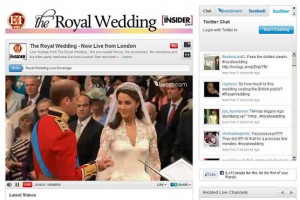
Fast forward to 2011 and the royal wedding, which sparked more than 2.7 million social mentions, with 94.7 per cent coming from Twitter. At one point during the April 29 event, live streaming peaked at 1.3 million. Statistics like this provide great insight to companies that want to use social television to engage viewers.
Television series such as Glee encourage fans to continuously use the hashtag #glee while watching the show live. Glee cast members also tweet to their fans during the show, driving the conversation levels up by 300 per cent.
Because of social television, networks and companies are also extending their websites and shows to become more compatible with mobile devices, which makes the two screen experience even better.
The Dutch airline KLM is on a winning streak, creating interesting campaigns using social media that connect the company’s Facebook, Foursquare and Twitter audiences to its real-world product. In April, in a campaign entitled Tile & Inspire, KLM invited people to visit TileYourself.com (the site closed on June 15) to create their own Delftware tile. Delftware is the distinctly Dutch blue and white painted and glazed pottery that was first manufactured in the Netherlands beginning in the mid-16th century.
KLM has been handing out gifts of Delft Blue miniature Dutch houses to its business class passengers on intercontinental flights since the 1950s. The miniature houses are based on specific buildings in the Netherlands and as an added bonus come filled with Bols gin.
According to KLM Corporate Communications, 120,000 tiles were designed by people from 154 countries. KLM attracted 50,000 new fans to its Facebook page, the video on how to make the tiles was viewed more than 460,000 times on YouTube and the TileYourself.com campaign website was visited more than 600,000 times.
A lucky 4,000 people were chosen to have their portraits appear on the side of a KLM Boeing 777-200. The video below shows just how they went about it.
Privacy Policy | © Copyright 2012 Delvinia